How to Move a Hot Tub: Professional Advice for a Smooth Move
Learning how to move a hot tub properly prevents damage and injuries during relocation. Hot tubs are heavy, bulky, and built differently by manufacturer and model, so plan the move around your specific spa rather than a one-size-fits-all procedure. This guide covers the planning steps that make a spa relocation safer.
Before anything else, record the manufacturer and model. Electrical setup, weight, drain locations, and handling recommendations all depend on the exact spa, and the owner's manual is the most reliable source for each of them.
Assessing Hot Tub Weight and Size
Check the manufacturer's manual or specification sheet for your spa's dry weight and dimensions instead of relying on a general figure. Empty weights vary widely by model and seating capacity, and a filled spa weighs far more than an empty one because of the water and occupants it holds — which is why a spa is always drained before moving and why the destination surface matters.
Measure the width, length, and height, including steps, handles, or other protruding parts. These measurements help you determine if the tub will fit through doorways, gates, and turns along your moving route. Walk the full route in advance and note stairs, slopes, soft ground, and tight corners, because the access route often determines what equipment and how much help the move requires.
Gathering Necessary Equipment and Supplies
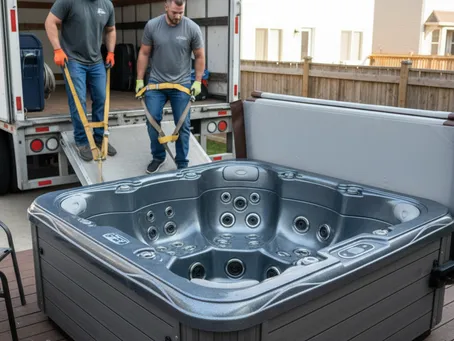
The right equipment depends on the spa's weight and the route. Heavy spas are typically moved with equipment suited to that weight — such as a spa dolly or spa-moving sled and heavy-duty straps — along with enough trained help. Do not assume ordinary furniture dollies or sliders are adequate for a full-size spa; an underrated dolly or an unbalanced tub can tip and cause crush injuries or shell and cabinet damage.
Moving blankets or thick furniture pads protect the surface from scratches. Keep a toolbox handy for removable components your manual says can be taken off, and use shrink wrap or heavy-duty plastic sheeting to keep dirt and debris off the tub during the move.
Disconnection and Draining Procedures
Shut off power to the spa at the breaker or disconnect before doing anything else. What happens next depends on how your spa is powered. Some smaller spas are plug-and-play units that connect to a standard outlet and can simply be unplugged. Many full-size spas are hardwired to a dedicated circuit through a GFCI breaker or disconnect box — for those, have a licensed electrician disconnect the wiring, and never open the spa's control equipment or handle the conductors yourself.
Drain the spa following the manufacturer's procedure — drain valve locations and steps differ by model. Attach a garden hose to direct water to a proper drainage area. Keep in mind that draining does not empty the plumbing lines and pump completely; residual water can remain, and in freezing weather it can damage the plumbing, so follow your manufacturer's guidance on protecting the lines if the spa will sit in the cold. Label and organize any removed parts so reassembly goes smoothly.
Securing and Protecting Hot Tub Components
Proper protection prevents damage during transport:
- Covering: Use a waterproof cover to protect the tub from dirt and damage.
- Securing Panels: Fasten any removable panels so they don't shift or fall off.
- Wrapping: Wrap delicate parts, such as control panels and jets, with moving blankets or bubble wrap.
- Securing the Tub: Strap the hot tub firmly to the moving truck to prevent it from sliding or tipping, supporting it the way the manufacturer recommends for your model.
Loading and Transporting Safely
Clear the path to the vehicle before the spa is moved. A drained full-size spa is still too heavy for a few people to lift by hand — it should be raised and moved with equipment rated for the weight and enough trained help, keeping the tub balanced and controlled at all times. Use ramps or a liftgate for loading, and never stand downhill of a spa on an incline.
Transport orientation and support points can depend on the manufacturer, model, and cabinet construction, so check the manual before tipping a spa on its side. Strap the tub down tightly to prevent movement during transport, distribute weight evenly, and drive carefully, avoiding sudden stops and sharp turns.
Reinstallation and Setup at New Location
Setting up your hot tub correctly at the new location requires careful attention:
- Placement: Position the tub on a level, stable surface that meets the manufacturer's base requirements and has good drainage. If you're considering a deck, have its load capacity verified before placing the spa.
- Connections: Plug-and-play spas reconnect per the manual; hardwired spas should be reconnected by a licensed electrician with the GFCI protection the manufacturer requires.
- Filling and startup: Fill the spa and follow the manual's startup sequence — many models require specific filling and priming steps before the equipment runs, so don't energize the spa ahead of them.
- Testing: Test all components before using the hot tub.
When scheduling a spa move, share the manufacturer and model, dimensions, how the spa is powered, and photos of the spa and the access route at both locations. Those details determine the equipment, crew, and any electrical help the move needs.