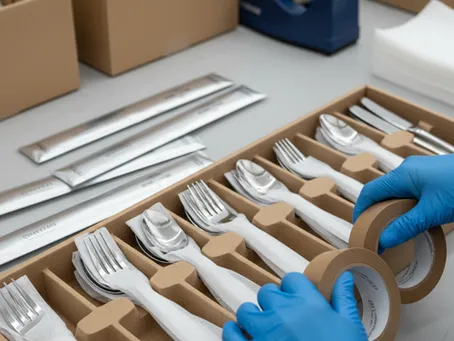
How to Pack Knives for Moving: Protect Your Sharp Items
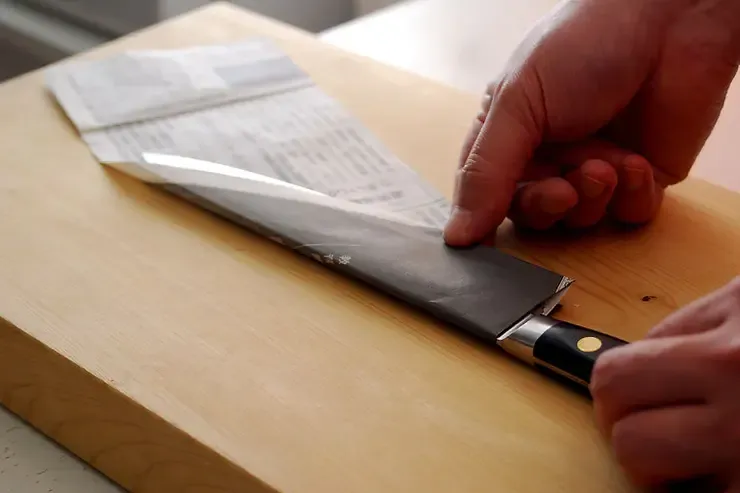
Kitchen knives need controlled containment during a move because an exposed or shifting blade can injure someone and damage the knife. Knives differ in blade length, shape, handle, finish, and manufacturer-provided storage, so there is no single wrapping method for every knife. This is general household-packing guidance, not weapons-law or specialty-blade advice; follow the knife and protective-product manufacturer's instructions when they differ.
Clean, Dry, and Gather Suitable Protection
Before packing, clean and dry each knife according to its care instructions. Moisture left on a blade or handle can contribute to corrosion or damage during storage. Use the original sheath, blade guard, or other manufacturer-provided protective system when available. If one is not provided, choose a purpose-made guard or a rigid cover that fully contains the edge and tip, fits the knife, and can stay secured without contacting or damaging the blade or finish.
Use a clean, undamaged box and cushioning that suit the size and weight of the packed knives. A box label does not make an exposed blade safe, and a double-wall specification is not a universal weight or safety guarantee. Do not pack knives loose, rely on a towel or loose paper alone, or apply tape directly to a blade edge or delicate finish.
Contain Each Blade Before Boxing
Protect each knife separately so its edge and tip are fully enclosed and cannot shift through the protective material. The cover should remain in place when the knife is handled, while cushioning can protect the outside of the cover and prevent contact between packed items. Do not bundle multiple knives with exposed blades together, carry them loose by hand, or improvise a cover that can slide off.
Knife blocks, rolls, trays, and fitted cases are not automatically secure shipping containers. Use one only when its design and the knife manufacturer's instructions make it suitable, and prevent knives from sliding out or leaving exposed portions vulnerable. If the block or case cannot keep the knives contained through normal handling, protect each knife separately instead.
Pack the Box to Prevent Shifting
Place contained knives so edges and tips cannot reach the box walls, one another, or other household items. Fill gaps with suitable cushioning so the contents do not rattle, but do not crush guards, handles, blocks, or delicate finishes. Keep knives separate from glassware and other fragile kitchen items, and do not overfill or make the box difficult to close and carry.
Seal the box using a closure appropriate for its contents and handling, then check that no blade can move through the packaging before it is transported. Keep the box away from moisture and follow the knife, case, and moving-vehicle instructions for its orientation and placement; do not assume one orientation is safe for every knife or container.
Label and Unpack With the Contents Visible
Mark the box clearly with a practical warning such as “Kitchen Knives” or “Sharp Items” so handlers know to use care. This label supplements secure containment; it does not replace it and does not classify ordinary household cutlery as a regulated weapon.
Open the box on a stable surface with the contents visible. Do not reach blindly into a knife box or package, and do not carry a loose knife by the blade. Remove each contained knife by its handle only after checking how it is covered, and stop if a guard, block, or package has shifted or been damaged.